Multi-Location Hiring: Building a Scalable Workforce Across Multiple Locations
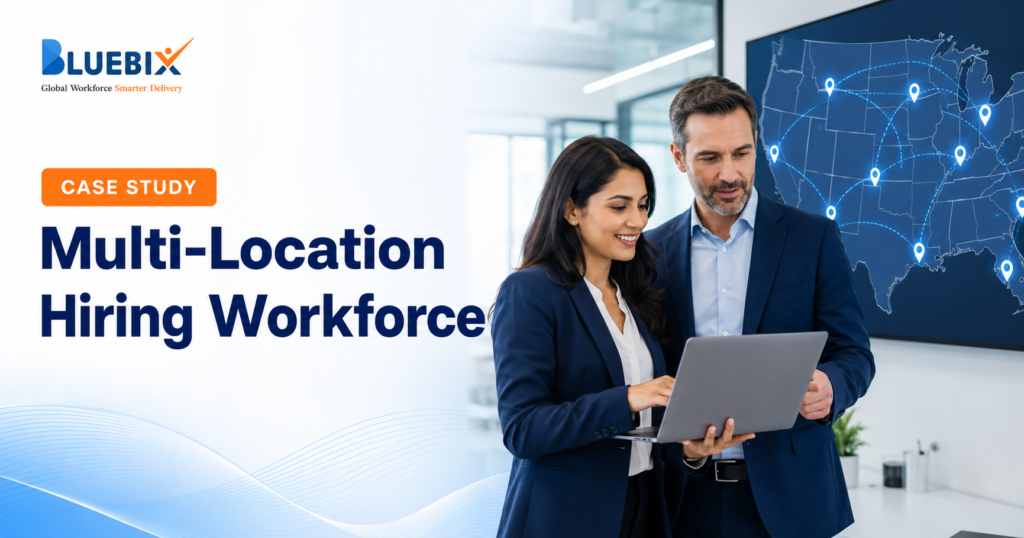
As businesses grow, hiring becomes more complex. Managing recruitment for one location is challenging enough. Expanding into multiple cities or states adds even more pressure.
A fast-growing manufacturing and operations company faced this exact problem. The company planned to expand operations across several U.S. locations within a short timeline.
However, inconsistent hiring processes, delayed candidate sourcing, and a weak talent pipeline slowed growth.
That is when BluebixInc stepped in.
With a structured staffing strategy, local market expertise, and a scalable recruitment model, Bluebixinc helped the company improve hiring speed, maintain workforce quality, and support long-term expansion goals.
The Client Challenge
The client operated in multiple regions and needed to hire for:
- Production and manufacturing roles
- Skilled engineering positions
- Operations management roles
- Maintenance and technical staff
- Administrative support positions
The biggest issue was not finding one employee. The challenge was building a repeatable hiring process across multiple locations simultaneously.
The company experienced:
- Different hiring standards across facilities
- Slow response times from traditional recruiters
- Limited access to qualified local talent
- High competition for skilled workers
- Delays in onboarding and workforce planning
- Increased overtime costs due to understaffing
Leadership realized that expansion could not continue without a reliable staffing partner that understood multi-location workforce management.
Understanding the Multi-Location Hiring Problem
Multi-location hiring is more than posting jobs in different cities.
Each market has unique labor conditions, pay expectations, candidate availability, and competition levels. A hiring strategy that works in one state may fail completely in another.
Many companies struggle because they:
- Use the same hiring process everywhere
- Lack of centralized workforce visibility
- Depend on reactive hiring instead of proactive planning
- Fail to maintain candidate pipelines before positions open
Bluebix approached the situation differently.
Instead of filling roles one by one, the team built a long-term distributed hiring strategy designed for scalability.
1. Supported Distributed Hiring Programs
The priority was creating a hiring structure that could support multiple locations without sacrificing quality or speed.
Bluebix created a distributed hiring program that included:
Centralized Recruitment Coordination
A dedicated recruitment coordination system helped standardize communication, candidate tracking, interview scheduling, and reporting across all locations.
This reduced confusion between hiring managers and improved accountability.
Local Market Talent Mapping
Bluebix researched each hiring market separately to understand:
- Talent availability
- Competitive wage ranges
- Hiring trends
- Candidate expectations
- Regional workforce challenges
For example, engineering talent in one region required different sourcing channels than production workers in another state.
This market-specific approach helped improve candidate quality and response rates.
Flexible Workforce Planning
The client also needed flexibility because hiring demand changed with the season and production volume.
Bluebix supported this by offering:
- Temporary staffing support
- Contract staffing
- Direct hire recruitment
- Project-based hiring assistance
This allowed the company to scale workforce levels without disrupting operations.
Expert Insight
Many growing businesses fail during expansion because they scale operations faster than they scale their hiring infrastructure.
A distributed hiring program creates consistency while still allowing flexibility for local workforce needs. This balance is critical for long-term growth.
2. Maintained a Consistent Pipeline
One of the biggest improvements came from pipeline development.
Before partnering with Bluebix, the client relied heavily on urgent hiring requests. Recruitment only started after positions became vacant.
This reactive model created hiring gaps and production delays.
Bluebix shifted the company toward proactive workforce planning.
Building Ongoing Talent Pipelines
Instead of waiting for open roles, recruiters continuously sourced and engaged candidates across key job categories.
This included:
- Manufacturing talent
- Maintenance technicians
- Electrical and mechanical engineers
- Operations supervisors
- Warehouse personnel
The result was a ready-to-engage talent pool for future openings.
Candidate Relationship Management
Bluebix maintained regular communication with qualified candidates, even when positions were not immediately available.
This helped:
- Improve response rates
- Reduce candidate drop-off
- Increase placement speed
- Strengthen employer reputation
Workforce Forecasting Support
The staffing team also worked closely with leadership to forecast future hiring needs based on:
- Expansion plans
- Production schedules
- Seasonal demand
- Employee turnover trends
This proactive approach reduced last-minute hiring pressure.
Practical Tip
Companies with multiple locations should always recruit ahead of demand. Waiting until positions become urgent often leads to rushed hiring decisions and higher turnover.
A healthy staffing pipeline creates stability and protects productivity.
3. Improved Hiring Efficiency
As hiring processes became more organized, efficiency improved across the board.
Bluebix streamlined several key recruitment stages.
Faster Candidate Screening
Recruiters used role-specific screening methods to identify qualified candidates earlier in the process.
This reduced wasted interviews and improved hiring manager confidence.
Standardized Hiring Workflows
Every location followed a more consistent hiring structure, including:
- Candidate evaluations
- Interview coordination
- Communication timelines
- Offer management
- Onboarding support
This created a smoother experience for both managers and candidates.
Reduced Time-to-Fill
Because talent pipelines already existed, hiring managers spent less time searching for candidates.
Open positions were filled faster, helping facilities maintain productivity levels.
Better Hiring Visibility
Leadership received clearer hiring reports and workforce updates across locations.
This improved workforce planning and allowed decision-makers to identify hiring bottlenecks earlier.
The Results
Within months, the client experienced measurable improvements across several areas.
Key Outcomes
- Faster hiring across multiple locations
- Improved workforce consistency
- Reduced operational disruptions
- Better access to skilled talent
- Stronger long-term hiring pipelines
- Improved hiring manager satisfaction
- Increased scalability for future expansion
Most importantly, the client gained confidence in its ability to grow without workforce instability slowing progress.
Why Multi-Location Hiring Requires the Right Staffing Partner
Expanding into new markets is exciting, but hiring challenges can quickly affect operations, production, and customer service.
Successful multi-location hiring requires:
- Local market expertise
- Centralized coordination
- Scalable recruitment systems
- Continuous pipeline development
- Workforce forecasting strategies
Businesses that rely on fragmented hiring processes often struggle with delays, turnover, and inconsistent workforce quality.
An experienced staffing partner helps create structure, speed, and long-term workforce stability.
Why Companies Choose BluebixInc
Bluebix supports businesses across industries with scalable staffing and workforce solutions designed for growth.
Services include:
- Multi-location hiring support
- Manufacturing staffing
- Engineering recruitment
- IT and non-IT staffing
- Temporary staffing
- Direct hire placement
- Workforce optimization solutions
The team focuses on building reliable hiring systems that help companies grow faster while maintaining workforce quality.
Final Thoughts
Multi-location hiring is not just about filling open jobs. It is about building a workforce strategy that supports growth, consistency, and operational success.
This case study shows how the right staffing approach can help companies reduce hiring pressure, improve efficiency, and prepare for long-term expansion.
Businesses that invest in proactive hiring systems today position themselves for stronger growth tomorrow.
Ready to Improve Your Multi-Location Hiring Strategy?
If your company is expanding across multiple locations and needs a reliable staffing partner, BluebixInc can help.
Connect with the team today to build a scalable workforce strategy that supports long-term business growth.
About the Author
BluebixInc Editorial Team
Staffing insights and workforce solutions for employers.