
Hiring Employees for a Small Business: A Complete 12-Step Guide

Hiring employees for a small business is exciting, but it can also feel risky. You may need help because work is piling up, customers are waiting, or your current team is stretched too thin. Still, one wrong hire can cost time, money, and trust.
The good news is that hiring does not need to be a guessing game. With a clear process, you can define the role, attract qualified people, interview fairly, handle essential paperwork, and help the new employee succeed.
This guide walks you through a practical 12-step hiring process that works for growing small businesses.
1. When Should a Small Business Hire Its First or Next Employee?
Hiring is not only about being busy. It is about recognising when the lack of help is limiting your business.
You may be ready to hire when:
- You regularly turn down profitable work.
- Customer service or delivery times are getting worse.
- Owners and managers spend too much time on repetitive tasks.
- Safety, quality, or production standards are slipping.
- You are opening a new location, shift, service, or contract.
- Existing employees work frequent overtime just to keep up.
Think of hiring like adding another lane to a busy road. If traffic keeps growing while the road stays the same, delays become the norm. A good employee can remove that bottleneck.
Employee vs. Contractor vs. Temporary Worker
Choose the work arrangement before you advertise the role.
- Employee: Best when you control the schedule, work methods, training, and daily responsibilities.
- Independent contractor: Better for defined projects, specialist work, or short-term outcomes.
- Temporary worker: Useful for seasonal demand, absences, urgent projects, or trial-to-hire needs.
Do not assume someone is a contractor simply because they work remotely, receive a 1099, or have an LLC. Worker classification depends on the real working relationship and applicable laws. Review the U.S. Department of Labour guidance on misclassification and obtain local HR or legal advice when needed.
2. Understand the True Cost of Hiring an Employee
Before posting a job, build a hiring budget. Salary is only one part of the cost.
Build a Realistic Hiring Budget
Include:
- Hourly wage or salary
- Employer payroll taxes
- Workers’ compensation and unemployment insurance
- Health benefits or paid leave, if offered
- Equipment, software, uniforms, PPE, and workspace
- Recruitment advertising
- Background checks or skills testing
- Manager time for screening and interviews
- Training and reduced productivity during the first few weeks
The U.S. Small Business Administration notes that a common rule of thumb is 1.25 to 1.4 times salary, though your real figure depends on location, benefits, industry, and role. Read the SBA cost guide.
For example, a $50,000 employee may cost roughly $62,500 to $70,000 after payroll-related and operating costs. This is not a fixed rule, but it helps you avoid hiring solely on salary.
A good question to ask is: “What revenue, time savings, production output, or customer value should this person create?
3. Step 1: Define the Business Problem Before Opening a Role
Do not begin with a job title. Begin with the problem.
Instead of saying, “We need a sales coordinator,” ask:
- What is not getting done today?
- What is the cost of leaving this work unfinished?
- Which tasks should move away from the owner or manager?
- What measurable result should improve after this hire?
For example, a production manager may need a machine operator not because the team is “busy,” but because delayed orders are creating missed delivery dates. That is a clear business case.
Create a One-Page Hiring Brief
Before anyone posts a job, document:
- The business problem
- The outcomes the hire must deliver
- Employment type and schedule
- Work location
- Pay budget
- Hiring deadline and final decision-maker
This brief keeps HR, supervisors, procurement teams, and business owners aligned. It also prevents a common hiring mistake: changing expectations after applicants have already entered the process.
4. Step 2: Choose the Right Employment Model and Work Schedule
The right hiring model depends on workload, urgency, and how long the business needs the skill.
Choose the Employment Type
- Full-time employee: Best for ongoing work that supports core operations.
- Part-time employee: Useful when demand is steady but does not require full-time coverage.
- Seasonal employee: Suitable for holiday retail, harvest periods, busy logistics cycles, or event-based demand.
- Temporary employee: Helpful for short projects, leave coverage, or demand spikes.
- Contract-to-hire employee: Lets you evaluate performance before making a permanent decision.
- Direct hire: Best for critical, long-term roles where retention matters.
A warehouse may need temporary workers during peak shipping months. A construction business may need skilled workers for a project. A growing office may need a permanent operations coordinator.
Decide on Work Location
Choose on-site, hybrid, or remote based on the work itself. Consider:
- Equipment and safety requirements
- Customer interaction
- Team communication
- Supervision needs
- Data access and security
- Training availability
A clear schedule and location reduce confusion and attract candidates who can genuinely meet the role requirements.
5. Step 3: Write a Clear Job Description and Candidate Profile
A job description is your hiring blueprint. It helps candidates understand the role and helps managers evaluate performance later.
What Every Job Description Should Include
- Clear job title
- Short purpose of the role
- Main responsibilities
- Required skills and experience
- Preferred but nonessential skills
- Manager or reporting line
- Work location and schedule
- Physical or safety requirements, where relevant
- Pay range and benefits information where required or appropriate
- First 90-day expectations
Separate Must-Haves From Trainable Skills
Many small businesses accidentally search for a “perfect” candidate. They list every skill they can imagine, then wonder why strong people do not apply.
Focus on real must-haves:
- Required license or certification
- Essential technical skill
- Shift availability
- Safety knowledge
- Ability to use necessary equipment
- Customer-facing communication, if needed
Then identify what you can teach after hiring. Someone may not know your exact software or process, but they may have the reliability, problem-solving ability, and work ethic to learn quickly.
Add 30-, 60-, and 90-Day Outcomes
For example:
- 30 days: Complete safety and systems training.
- 60 days: Handle regular responsibilities with limited supervision.
- 90 days: Meet agreed productivity, quality, or customer-service targets.
These outcomes make the role more practical than a long list of vague duties.
6. Step 4: Select the Best Hiring Channel for the Role
There is no single best place to find employees. The right channel depends on the role, location, skill level, and urgency.
Where Can Small Businesses Find Employees?
Consider:
-
- Employee referral programs
- Local workforce centres
- Community colleges and trade schools
- Industry associations
- Your company website and social media pages
- Local community groups
- Specialised staffing agencies
For entry-level or local roles, community connections and referral networks can work well. For skilled industrial, technology, engineering, healthcare, or high-volume positions, a staffing partner may provide faster access to qualified candidates.
DIY Hiring vs. Staffing Agency vs. RPO
|
Hiring approach |
Best for | Main advantage |
Watch-out |
|
DIY hiring |
One predictable vacancy |
Lower direct cost |
Requires internal time |
|
Staffing agency |
Urgent, skilled, temporary, or high-volume hiring | Faster access to talent | Choose a specialised partner |
|
RPO |
Ongoing large-scale hiring | Scalable recruitment support |
May be too much for one role |
When Should You Use a Staffing Agency?
A staffing agency can help when:
- You need people quickly.
- Your manager has no time to recruit.
- You have seasonal or project-based demand.
- The position requires hard-to-find skills.
- You need temporary-to-hire flexibility.
- Your business needs several employees at once.
The goal is not to outsource every hire. It is to use the right support when time, hiring volume, or talent scarcity creates risk.
7. Step 5: Create a Job Ad That Attracts Qualified Applicants
A job description is mainly an internal document. A job ad is a message to real people, letting them decide whether your business is worth their time.
Start with why the role matters. Then make the essentials easy to scan.
A Strong Small-Business Job Ad Includes
- Accurate job title
- One-sentence role summary
- Main duties
- Must-have qualifications
- Pay range, where applicable
- Schedule and location
- Benefits or meaningful perks
- A short, honest picture of your work environment
- Simple application instructions
Avoid empty phrases such as “rockstar,” “self-starter,” or “fast-paced environment” unless you explain what they mean. Candidates want practical answers: What will I do? When will I work? Who will I report to? What will success look like?
Simple Job Ad Formula
Job title + why the role matters + key duties + must-have skills + pay/schedule + how to apply.
For example: “Join our production team to help meet customer orders on time. You will operate equipment, complete quality checks, and follow safety procedures on a day shift.”
Clear ads attract better-fit candidates and reduce irrelevant applications.
8. Step 6: Use AI in Hiring Responsibly and Keep Human Judgment
AI can save small businesses time, especially when HR resources are limited. Think of it as a drafting assistant, not a hiring manager.
Helpful AI Uses in Recruitment
You can use AI tools to:
- Draft job descriptions
- Create clearer job-ad versions
- Build interview scorecards
- Prepare candidate email templates
- Create onboarding checklists
- Turn manager notes into structured summaries
For example, you can ask an AI tool: “Create five behavioral interview questions for a warehouse supervisor role focused on safety, coaching, and shift handover.” Then a human manager should review and adapt the questions.
What AI Should Not Decide
Do not let AI make the final hiring decision. Human reviewers must evaluate skills, work samples, references, and role fit. Protect candidate privacy, too.
Avoid entering confidential resumes, medical data, or sensitive personal information into tools unless your company has approved safeguards.
Candidates increasingly ask conversational questions through ChatGPT, Gemini, Claude, Copilot, and Perplexity. Your job ad should answer these questions directly: pay, schedule, location, duties, growth opportunities, and the interview process.
9. Step 7: Screen Applicants Fairly and Efficiently
Resume screening should be consistent. Otherwise, the loudest or most polished candidate may get attention while the best-fit candidate is missed.
Build a Basic Candidate Scorecard
Score each applicant against the same criteria:
- Essential experience
- Required certification or license
- Job-specific skills
- Shift or schedule fit
- Location or commute feasibility
- Communication quality
- Evidence of reliability
- Work samples or assessment results
Use a simple 1-to-5 scale. This makes the selection process easier to explain and compare.
Look Beyond Resume Style
A polished resume does not always mean strong performance. Examples include:
- A short spreadsheet task for an office coordinator
- A safety scenario for a production worker
- A mock customer call for a service role
- A portfolio review for a designer or marketer
- A brief technical test for a skilled trade role
Keep assessments relevant, short, and the same for each candidate.
Also, respond quickly. A qualified applicant may accept another job if your team waits too long. Set a simple standard: contact strong candidates as soon as possible after review.
10. Step 8: Run Structured, Legal, and Useful Interviews
A structured interview is not stiff or robotic. It simply means each shortlisted candidate gets the same core questions and evaluation criteria.
Ask Questions That Connect to the Job
Use:
- Behavioral questions: “Tell me about a time…”
- Scenario questions: “What would you do if…”
- Work-sample discussions
- Questions about availability and role expectations
- Questions about motivation to do this specific work
Five Interview Questions to Adapt
- “Tell me about a time you solved a problem similar to one in this role.”
- “How do you prioritize when several urgent tasks arrive at once?”
- “Describe a time you made a mistake at work. What did you do next?”
- “What support helps you do your best work?”
- “What would you aim to accomplish in your first 30 days?”
Listen for clear examples, ownership, communication, and realistic thinking.
Keep Questions Job-Related
Avoid questions about age, religion, disability, pregnancy, marital status, family plans, national origin, or other protected personal characteristics. The EEOC’s pre-employment inquiry guidance is a helpful starting point.
If you need to confirm availability, ask: This role works Tuesday through Saturday from 8 a.m. to 5 p.m. Can you reliably meet that schedule? This is better than asking personal questions about childcare, family, or religious commitments.
11. Step 9: Check References, Make the Decision, and Reduce Bias
When you have two or three finalists, avoid deciding only on “gut feeling.” A structured decision protects your business from rushed choices.
Conduct Job-Relevant Reference Checks
Ask consistent questions, such as:
- What was the person’s role and main responsibility?
- How reliable were they with attendance and deadlines?
- What were their strongest work habits?
- What coaching or support did they need?
- Would you rehire them if the right role became available?
Use a Hiring Decision Matrix
Score finalists on:
- Essential skills
- Reliability
- Work sample or assessment
- Interview evidence
- Reference feedback
- Schedule and role fit
A candidate does not need to be identical to the current team. The best hire may bring a different perspective, stronger skills, or a more dependable work style. What matters is whether they can meet the role’s actual needs and work productively with your team.
12. Step 10: Make a Clear, Professional Job Offer
Once you choose a candidate, act quickly. A verbal offer may start the conversation, but follow it with a written offer letter.
Include These Details
- Job title
- Start date
- Manager or reporting line
- Pay rate and pay schedule
- Work schedule and location
- Benefits eligibility
- Any lawful offer conditions
- Deadline to accept
Use plain language. The candidate should not need to guess what they are accepting.
Your offer letter should reflect local employment requirements. Avoid using vague wording or making promises your business cannot keep.
If you are unsure about contracts, at-will language, probation periods, or state-specific requirements, have an HR professional or employment attorney review the document.
A clean offer process builds confidence. It tells the candidate that your business is organized and respects their decision.
13. Step 11: Complete Payroll, Tax, and Hiring Compliance Tasks
Hiring someone means taking on responsibility for more than their daily work. You must also set up payroll, taxes, records, and required employment processes.
Essential New-Hire Setup Checklist
- Register and maintain employer tax details
- Set up payroll
- Collect applicable tax withholding forms
- Complete employment eligibility verification
- Report the new hire as required
- Arrange workers’ compensation and unemployment insurance where required
- Provide required workplace notices
- Maintain payroll and employment records
- Share basic workplace policies and safety procedures
The Fair Labor Standards Act covers the federal minimum wage, overtime, recordkeeping, and youth employment standards. State and local rules may provide additional protections or higher wage requirements. Review the DOL FLSA overview and confirm the rules that apply to your business
The Fair Labor Standards Act covers the federal minimum wage, overtime, recordkeeping, and youth employment standards. State and local rules may provide additional protections or higher wage requirements. Review the DOL FLSA overview and confirm the rules that apply to your business
of hours, wages, deductions, and employment information.
The DOL explains that employers generally must retain payroll records for at least 3 years, while wage-computation records may need to be retained for 2 years. See the DOL recordkeeping fact sheet.
This section provides general information, not legal or tax advice. Always verify current federal, state, and local obligations.
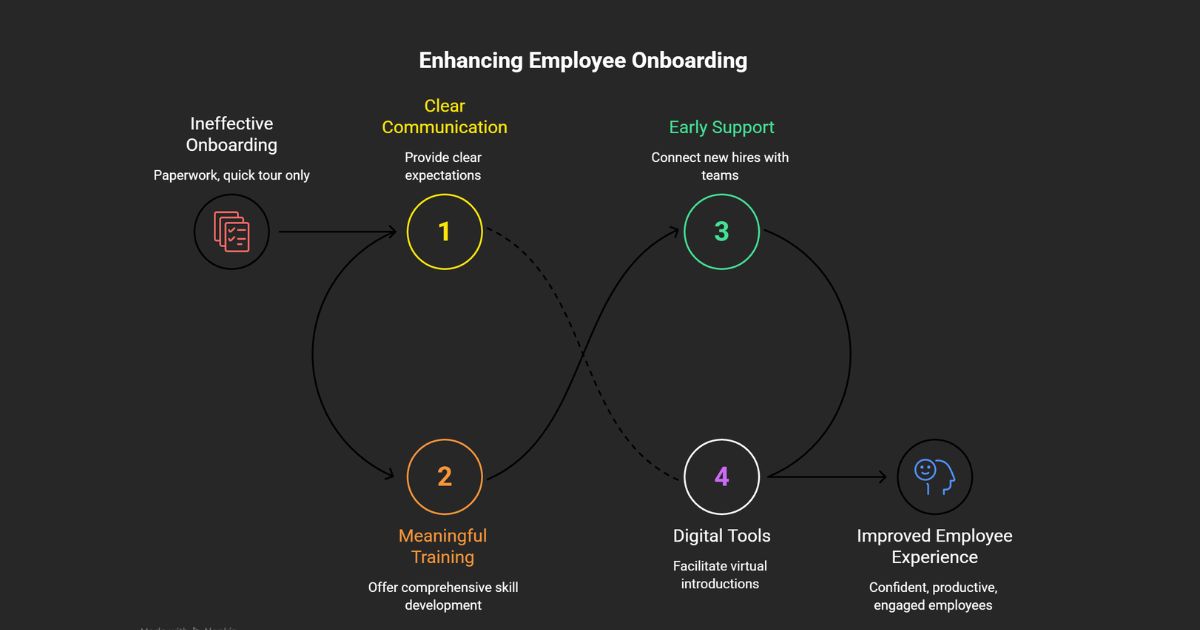
14. Step 12: Onboard the New Employee for a Strong First 30 Days
A signed offer is not the finish line. It is the starting line.
Poor onboarding is like handiPayroll and Recordkeeping Matter
Payroll errors damage trust quickly. Employees need to know when and how they will be paid. Keep accurate records ng someone a map with half the streets missing. They may eventually find their way, but the journey will be slow and frustrating.
Prepare Before Day One
Set up:
- Equipment, tools, system access, and workspace
- Uniforms or PPE, if required
- Training schedule
- Safety instructions
- Team introduction
- First-week goals
- A manager check-in plan
First-Day, First-Week, and First-30-Day Plan
Day One
Welcome the employee, explain the role, complete required forms, review safety basics, and show them where to get help.
First Week
Use job shadowing, hands-on training, daily check-ins, and simple written priorities. Avoid overwhelming the person with every policy at once.
First 30 Days
Review progress against the job’s 30-day outcomes. Ask:
- What is clear?
- What is still confusing?
- What training is missing?
- What tools or support would help?
A strong onboarding plan improves retention, productivity, and confidence. It also helps supervisors catch small problems before they become reasons for a new employee to leave.
15. Common Small-Business Hiring Mistakes to Avoid
Small hiring mistakes often become expensive because small teams feel every gap.
Avoid these common problems:
- Hiring before defining the work: You may end up with the wrong role.
- Budgeting only for salary: Payroll costs, equipment, and training add up.
- Writing vague job ads: Qualified candidates may skip unclear opportunities.
- Listing impossible requirements: You may exclude trainable, high-potential applicants.
- Interviewing without a scorecard: Decisions become inconsistent.
- Waiting too long to respond: Good candidates move quickly.
- Ignoring candidate experience: Poor communication damages your employer’s reputation.
- Treating onboarding as paperwork: New employees need training, clarity, and support.
The solution is simple: build a repeatable process.
Your 12-Step Small Business
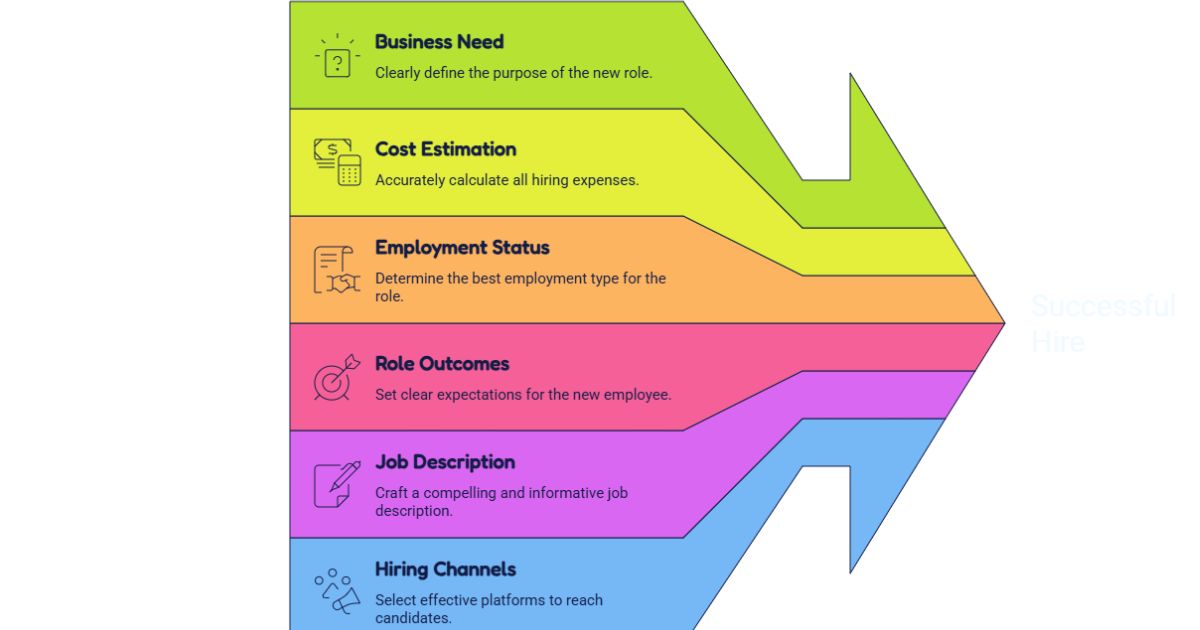
Use this quick checklist before and after every hire:
- Confirm the business need.
- Estimate the full cost of hiring.
- Choose employee, contractor, temporary, or contract-to-hire status.
- Define the outcomes for the role.
- Write the job description and candidate profile.
- Select the right hiring channels.
- Publish a clear, candidate-focused job ad.
- Screen applicants with a scorecard.
- Run structured interviews.
- Check references and compare finalists fairly.
- Make the offer and complete the required setup.
- Onboard, train, and review the first 30 days.
This checklist can also serve as a downloadable resource for your hiring hub.
A simple PDF checklist gives busy owners and managers something practical they can save, share, and use during their next vacancy.
FAQs: Hiring Employees for a Small Business
How do I know if I can afford to hire an employee?
Start with more than salary. Estimate payroll taxes, insurance, equipment, training, and the manager’s time. Then connect the role to a business result, such as more sales, higher production, better customer service, or less overtime. If the employee’s likely value supports the total cost, hiring may be justified.
Should I hire a full-time employee or start with temporary staffing?
Choose full-time hiring when the work is ongoing and central to your business. Temporary staffing is useful for demand spikes, projects, leave coverage, or uncertain workload. Contract-to-hire can also help you evaluate practical fit before making a long-term commitment. The right choice depends on your staffing forecast.
What is the best way to find reliable employees locally?
Use several channels at once: employee referrals, local workforce centers, community colleges, trade schools, local job boards, and your company website. Be specific about pay, schedule, location, and duties. Reliable candidates are more likely to apply when the job ad is honest and easy to understand.
Should a small business include pay in a job advertisement?
In many places, pay transparency is required or increasingly expected. Even where it is not required, including a realistic range can reduce unsuitable applications and save time. Candidates need enough information to decide whether the opportunity fits their needs before they invest in an interview.
What matters more: experience or attitude?
Both matter, but the role decides the balance. For safety-sensitive or licensed jobs, required skills and certifications come first. For trainable roles, reliability, communication, willingness to learn, and problem-solving can be just as valuable. Define what cannot be taught quickly, then assess the person as a whole.
How can I test skills without making candidates do unpaid work?
Use a short, job-related assessment that takes a reasonable amount of time. For example, ask a coordinator to prioritize sample emails or ask a supervisor to respond to a safety scenario. If the task produces real business value or requires significant time, consider paying candidates for it.
What should I do if my best candidate declines the offer?
Keep one or two strong backup candidates engaged until the offer is accepted. Ask the declining candidate, respectfully, why. Their response may reveal issues with pay, timing, communication, or job expectations. Use the feedback to improve the next offer without pressuring them.
Can a small business use ChatGPT for hiring?
Yes, for drafting job ads, interview questions, onboarding plans, and communication templates. However, do not let an AI tool make hiring decisions. Managers should review all content, protect applicant privacy, and assess people through consistent, job-related evidence rather than automated assumptions.
How long should the hiring process take for a small business?
There is no fixed timeline, but speed matters. A simple role may take a few weeks, while a highly skilled role may take longer. Set target dates for posting, screening, interviews, decision-making, and offers. Delays often cause businesses to lose qualified candidates to faster employers.
When should I work with a staffing agency instead of recruiting on my own?
Consider an agency when the role is urgent, specialised, temporary, high-volume, or difficult to fill. It can also help when managers do not have enough time to source and screen candidates. Choose a staffing partner that understands your industry, communicates clearly, and explains its process and costs.
Conclusion: Build a Hiring Process You Can Repeat
Hiring employees for a small business becomes easier when you treat it as a repeatable system instead of a rushed reaction.
Define the work, budget the full cost, use clear job ads, assess people fairly, complete essential compliance tasks, and support new employees after they start. This approach protects your time and helps your team grow with more confidence.
When your hiring needs become urgent, specialized, seasonal, or high-volume, BluebixInc can help you access qualified talent through flexible staffing, contract-to-hire, and direct-hire solutions.
About the Author
BluebixInc Editorial Team
Staffing insights and workforce solutions for employers.