LinkedIn Profile Optimization Guide 2026: Build a Recruiter-Friendly Professional Profile
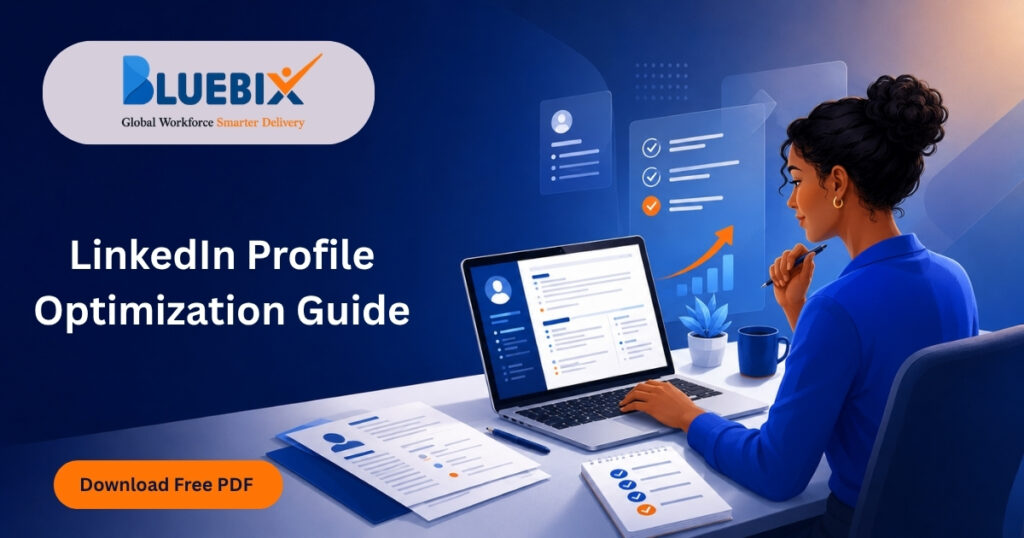
Your LinkedIn profile is more than an online resume. For students, recent graduates, job seekers, and career changers, it can act as a digital professional identity that helps recruiters, employers, and industry professionals quickly understand who you are, what you can do, and where you want your career to go.
However, simply creating a LinkedIn account is not enough. A strong profile needs clear positioning, relevant skills, credible evidence, consistent career information, and professional activity.
The BluebixInc 2026 LinkedIn Profile Optimization Guide is designed to help students, graduates, entry-level candidates, career changers, and experienced job seekers improve their profiles step by step and use LinkedIn more effectively during a job search.
Start With a Clear Professional Direction
Before changing individual sections of your LinkedIn profile, decide what you want the profile to communicate.
Ask yourself:
- What type of job am I targeting?
- Which field or industry interests me?
- What skills are most relevant to that direction?
- What projects, education, experience, or achievements prove those skills?
Every important section of your profile should support the same general career direction.
The BluebixInc framework follows eight practical stages: Position, Brand, Optimize, Keyword, Prove, Connect, Engage, and Apply.
Rather than trying to impress everyone, focus on making your professional story clear and relevant to the opportunities you actually want.
Optimize Your Headline and About Section
Your headline is one of the first pieces of information people see on your profile. Avoid relying only on vague descriptions such as “Student,” “Job Seeker,” or “Looking for Opportunities.”
A useful structure is:
Role or Field + Relevant Skills + Career Value or Focus
For example:
Business Analytics Student | Excel & SQL | Data Visualization | Seeking Data Analyst Internship
Your About section should then expand on that headline. Explain who you are, what you know, what you have done, and what direction you are pursuing.
Avoid simply copying your resume. LinkedIn gives you an opportunity to create a more connected career story.
Strengthen Your Experience, Education, and Projects
Experience descriptions should show more than duties.
Instead of writing:
“Worked on social media.”
Explain what you actually contributed:
“Created social media content for a university organization and analyzed engagement to identify higher-performing topics.”
Whenever possible, describe the project or responsibility, the skills or tools you used, and the outcome. Only include measurable results when they are accurate and can be supported.
Students and recent graduates should remember that professional evidence does not have to come only from full-time employment. Relevant coursework, academic projects, internships, part-time jobs, freelance work, volunteering, campus leadership, certifications, and personal projects can all strengthen a profile when they demonstrate useful capabilities.
Use Skills and Keywords Naturally
Relevant keywords can help make your professional direction easier to understand, but your profile should never become a list of disconnected buzzwords.
Start with your target role and review several relevant job descriptions. Look for skills, tools, qualifications, and terminology that appear repeatedly.
Then identify which of those skills genuinely match your background.
Add relevant terms naturally to your headline, About section, experience, projects, skills, and education where appropriate.
More importantly, prove what you claim. Projects, certifications, recommendations, portfolio links, publications, volunteer experience, and demonstrated achievements can all provide credibility.
Never add a skill, certification, achievement, or result that you cannot support.
Build a Professional Network
LinkedIn is also a networking platform.
Start by connecting with classmates, alumni, colleagues, instructors, recruiters, and professionals in your target field. Follow companies you are interested in and participate thoughtfully in relevant professional conversations.
Avoid sending large numbers of generic connection requests.
A simple personalized message explaining your career interest and why you would like to connect can create a more professional first impression.
Focus on building relationships before asking people directly for job opportunities.
Turn LinkedIn Into a Job-Search Tool
An optimized profile should support your broader job-search strategy.
Create relevant job alerts, use search filters, follow target employers, study job descriptions, tailor applications, and keep track of follow-ups.
You can also build professional visibility by sharing useful content such as project lessons, industry observations, certification milestones, internship reflections, professional learning, or portfolio updates.
Consistency matters more than trying to appear active every day.
Complete the 25-Point LinkedIn Profile Audit
Before applying for jobs, review your entire profile.
Check your professional photo, banner, headline, location, About section, experience, education, projects, skills, certifications, portfolio, job preferences, networking strategy, and overall career direction.
Make sure your LinkedIn information is consistent with your resume, especially job titles, employment dates, education, certifications, and major skills.
Download the 2026 LinkedIn Profile Optimization Guide
A strong LinkedIn profile will not guarantee recruiter messages, interviews, or job offers—but it can help you present your experience, skills, and career direction more clearly and professionally.
Download the free BluebixInc 2026 LinkedIn Profile Optimization Guide for a practical profile checklist, headline examples, keyword strategy, student and entry-level guidance, networking tips, job-search routines, and a complete 25-point LinkedIn profile audit.
Use it to review your profile before your next internship, graduate role, career move, or job application.
About the Author
BluebixInc Editorial Team
Staffing insights and workforce solutions for employers.