Healthcare Hiring Toolkit Cover Free PDF Downloade
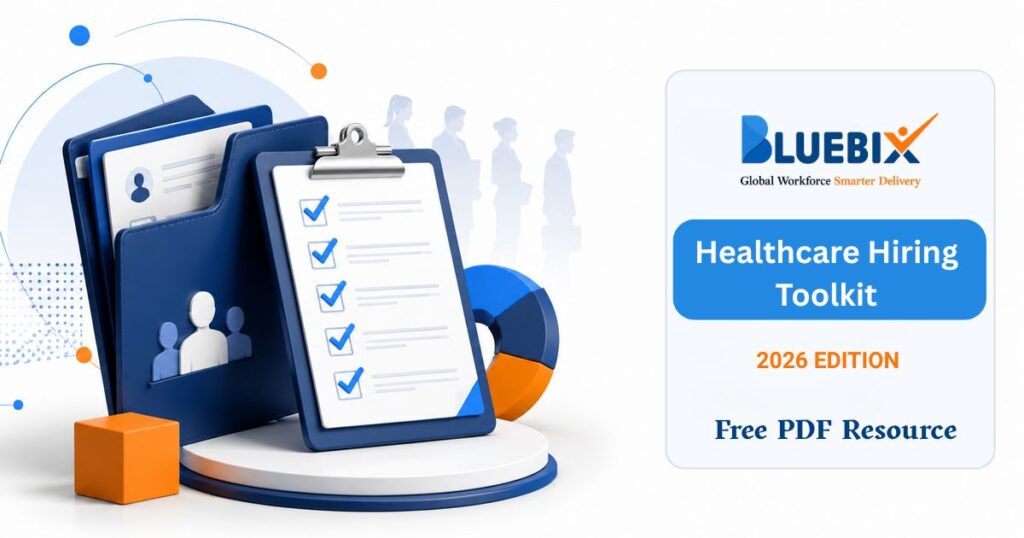
The Bluebix Inc Healthcare Hiring Toolkit 2026 is a practical 25-page PDF designed to help healthcare employers organize and improve their hiring process. It includes checklists, worksheets, scorecards, assessments, KPI tools, and onboarding resources for hospitals, clinics, medical practices, healthcare facilities, and staffing teams.
What Is the Healthcare Hiring Toolkit?
The Healthcare Hiring Toolkit is a downloadable PDF resource that brings the most important healthcare hiring activities into one organized guide. Instead of managing separate documents for job descriptions, candidate screening, interview feedback, hiring costs, and onboarding, employers can use one toolkit to guide the entire process.
The toolkit follows a simple hiring framework:
- Plan
- Attract
- Evaluate
- Hire
- Retain
This framework helps hiring teams move from identifying a workforce need to supporting a new employee during the first 90 days and beyond.
What Is Included in the Healthcare Hiring Toolkit PDF?
Healthcare Hiring Checklist
The healthcare hiring checklist helps employers organize the main steps involved in recruiting healthcare professionals. It covers workforce planning, job descriptions, candidate sourcing, resume review, interviews, credential verification, offers, and onboarding.
Employers can use this checklist to confirm that key steps are completed before advancing a candidate. It also helps hiring managers understand who is responsible for each stage of the process.
Hiring Readiness Assessment
Before starting a new recruitment campaign, healthcare organizations need to understand whether their internal hiring process is ready.
The Hiring Readiness Assessment allows teams to evaluate areas such as:
- Workforce planning
- Job descriptions
- Candidate sourcing
- Screening and interviews
- Onboarding
Each section includes a scoring system that helps employers identify strengths and areas that need improvement. The assessment can be used before launching a new search or when reviewing an existing healthcare recruitment process.
Candidate Screening Worksheet
The Candidate Screening Worksheet provides a structured way to review applicants. Healthcare employers can use it to record relevant experience, professional licenses, certifications, employment history, availability, communication quality, and other role-related qualifications.
Using a standard screening worksheet helps reduce inconsistent evaluations. It also gives hiring teams a clear record of why a candidate was advanced, placed on hold, or declined.
Interview Scorecard
Healthcare interviews should evaluate candidates against the requirements of the role. The Interview Scorecard helps interviewers record feedback in a consistent format.
Hiring teams can use the scorecard to evaluate professional experience, technical ability, communication, problem-solving, teamwork, reliability, and role-specific competencies.
The scorecard also encourages interviewers to document evidence rather than rely solely on general impressions. This makes it easier to compare candidates and conduct a more organized hiring discussion.
Candidate Decision Matrix
When several qualified candidates are being considered, making the final decision can be difficult. The Candidate Decision Matrix helps employers compare applicants using consistent criteria.
Hiring managers can review each candidate’s skills, experience, interview performance, credentials, availability, and overall role fit. This creates a clearer decision-making process and helps the hiring team remain aligned.
Hiring KPI Dashboard and Cost Worksheet
Healthcare hiring performance should be measured, not only discussed. The toolkit includes a Hiring KPI Dashboard that helps employers monitor important recruiting activities and outcomes.
Teams can use the dashboard to track information such as time-to-hire, offer rate, retention, candidate progress, and hiring activity.
The Hiring Cost Worksheet helps organizations review the financial impact of recruitment. It can be used to organize expenses related to job advertising, sourcing, interviews, background checks, hiring support, onboarding, and other recruitment activities.
Understanding hiring costs can help employers plan budgets and identify opportunities to improve efficiency.
Onboarding and Retention Plan
Hiring does not end when a candidate accepts an offer. A strong onboarding process helps new employees understand their responsibilities, access the tools they need, complete training, meet the team, and become comfortable in the workplace.
The Onboarding and Retention Plan includes a structured timeline covering:
- Before the first day
- The first week
- The first month
- The second month
- The third month
Managers can use this plan to schedule check-ins, review performance, discuss employee feedback, identify training needs, and set long-term goals.
Annual Hiring Calendar and Recommended Workflow
The toolkit also includes an Annual Hiring Calendar to help healthcare organizations plan recruitment activities throughout the year. This can be useful for organizations that experience seasonal staffing needs, regular workforce changes, or ongoing recruitment requirements.
The Recommended Hiring Workflow brings the toolkit components together into one process. It helps employers understand which checklist, worksheet, or scorecard to use at each stage of the hiring process.
Why Is Healthcare Hiring Different?
Healthcare hiring often involves additional requirements compared with many other industries. Employers may need to review professional credentials, licenses, certifications, references, background screening, availability, shift requirements, and experience in specific healthcare environments.
Healthcare organizations also need employees who can communicate clearly, work collaboratively, manage responsibilities, and support quality patient care. This underscores the importance of evaluating candidates using role-related criteria rather than basing decisions solely on resumes or first impressions.
A structured Healthcare Hiring Toolkit can help employers create a more consistent process while keeping the hiring team focused on each position’s requirements.
Who Should Use This Healthcare Hiring Toolkit?
This PDF can be used by:
- HR directors
- Human resources managers
- Healthcare recruiters
- Talent acquisition specialists
- Hospital administrators
- Clinic managers
- Medical practice owners
- Healthcare operations managers
- Staffing coordinators
It can support hiring for hospitals, clinics, medical practices, long-term care organizations, rehabilitation centres, outpatient facilities, and other healthcare workplaces.
How to Use the Toolkit
Start by identifying the role and documenting the workforce need. Next, review the job description and create a sourcing plan. Use the screening worksheet to evaluate candidates, then use the interview scorecard and decision matrix to compare finalists.
After selecting a candidate, use the onboarding and retention plan to prepare for the first 90 days. Finally, review hiring KPIs and costs regularly so your team can improve the process over time.
The toolkit can be printed, shared with the hiring team, or used as a working digital resource during recruitment planning and candidate evaluation.
Download the Free Healthcare Hiring Toolkit PDF
The BluebixInc Healthcare Hiring Toolkit 2026 gives healthcare employers a practical framework for planning, evaluating, hiring, onboarding, and retaining qualified professionals.
Use the toolkit to create a more organized hiring process, improve team alignment, and build a stronger healthcare workforce.
Need help hiring healthcare professionals?
About the Author
BluebixInc Editorial Team
Staffing insights and workforce solutions for employers.