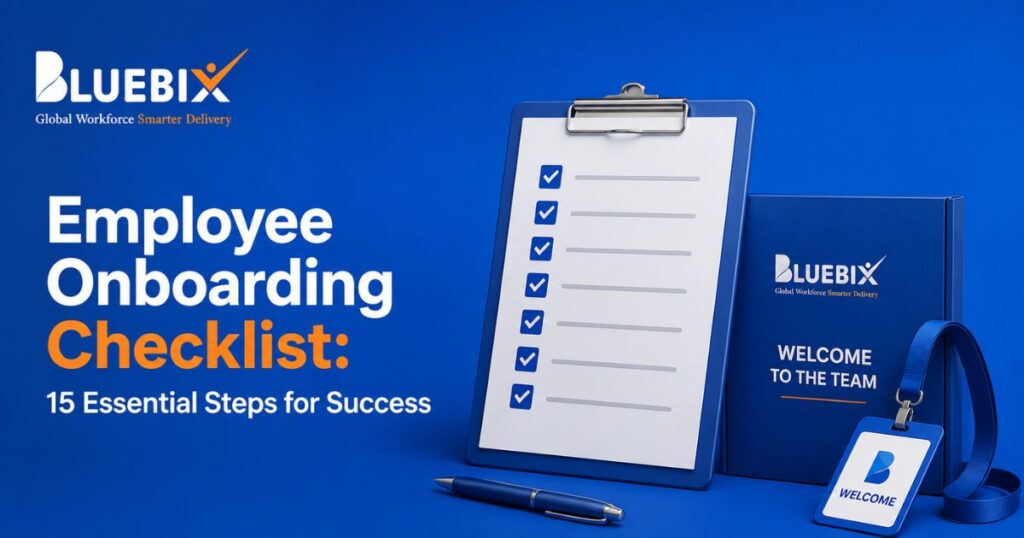
Employee Onboarding Checklist: 15 Essential Steps for Success
An effective Employee Onboarding Checklist gives every new hire the tools, information, and support they need from day one. In 2026, companies face rising recruitment costs, higher employee expectations, and stronger competition for skilled talent.
A structured onboarding process reduces confusion, improves engagement, and helps employees become productive faster.
Whether you manage a small business or a large workforce, this guide explains why onboarding matters and introduces a practical 25-step employee onboarding checklist designed to improve retention, productivity, and employee experience.
What Is an Employee Onboarding Checklist?
An employee onboarding checklist is a step-by-step guide that helps HR teams and managers organize all the tasks involved in welcoming a new employee.
It covers everything from sending a welcome email and completing paperwork to providing training, introducing team members, and setting performance goals.
Unlike a simple orientation, onboarding is an ongoing process that usually lasts several weeks or months. Its purpose is to help employees understand their roles, learn company processes, and become confident team members.
A standardized checklist ensures every employee receives the same high-quality experience, regardless of department or location.
It also helps HR teams avoid missed tasks, improves compliance, and creates a smoother hiring process.
An effective onboarding checklist typically includes:
- Preboarding activities before the first day
- Employment documents and company policies
- IT accounts and equipment setup
- Team introductions
- Job-specific training
- Compliance and safety training
- Regular manager check-ins
- Employee feedback sessions
Think of it as a roadmap for success. Instead of leaving important tasks to memory, every step is planned and tracked.
This creates a better first impression, reduces onboarding mistakes, and helps new hires become productive more quickly.
Why Employee Onboarding Matters
Employee onboarding has become more important than ever as businesses compete for skilled talent in a changing workplace.
Employees now expect more than paperwork and a quick office tour—they want clear communication, meaningful training, and support from the beginning.
At the same time, hybrid and remote work have made onboarding more challenging. New hires often need digital tools, virtual introductions, and structured guidance to feel connected with their teams.
A strong onboarding process benefits both employees and employers by:
- Improving employee confidence from the first day
- Reducing the time needed to reach full productivity
- Increasing employee engagement
- Supporting better collaboration across teams
- Lowering early employee turnover
- Strengthening employer branding
Organizations with structured onboarding programs often experience higher retention because employees understand their responsibilities, know where to find support, and feel valued from the start.
People Also Ask
Why is onboarding important?
It helps employees understand their roles, the company culture, and expectations, reducing confusion during the first few months.
How does onboarding improve retention?
Employees who receive proper training and regular support are more likely to stay with the company and remain engaged.
Does onboarding affect productivity?
Yes. Employees who receive structured training, the right tools, and clear expectations generally become productive more quickly than those in an informal onboarding process.
Benefits of Using an Employee Onboarding Checklist
A structured onboarding checklist provides consistency throughout the hiring process and ensures every employee receives the support they need to succeed.
Instead of relying on memory or informal processes, HR teams and managers can follow a clear plan that improves both employee experience and business performance.
Key benefits include:
Faster Employee Productivity
Employees receive the tools, system access, and training they need without unnecessary delays, helping them contribute sooner.
Better Employee Engagement
A warm welcome, regular communication, and clear expectations make employees feel valued and connected to the organization.
Lower Employee Turnover
Employees who experience a positive onboarding journey are more likely to remain with the company and build long-term careers.
Improved Compliance
A checklist helps HR complete employment documents, policy acknowledgments, and required training on time, reducing compliance risks.
Stronger Team Collaboration
Introducing employees to managers, coworkers, and cross-functional teams early encourages communication and teamwork.
Better Candidate Experience
An organized onboarding process reinforces the employee’s decision to join the company and strengthens the employer’s reputation.
Easier HR Management
Using the same onboarding process for every hire reduces administrative work, improves consistency, and makes progress easier to track.
Consistent Hiring Across Departments
Whether hiring office staff, remote employees, healthcare professionals, or manufacturing workers, a standardized checklist ensures every new hire receives the same quality onboarding experience.
An employee onboarding checklist is more than an administrative document—it is a strategic tool that helps businesses build stronger teams, improve retention, and create a positive employee experience from day one.
Employee Onboarding Timeline: From Offer Letter to 90 Days
A successful onboarding process does not begin on an employee’s first day—it starts as soon as they accept the job offer. Breaking onboarding into clear stages helps employees learn gradually instead of feeling overwhelmed. The timeline below provides a simple framework that HR teams and managers can follow.
Before Day One (Preboarding)
Preboarding focuses on preparation. Send a welcome email, complete employment paperwork, prepare equipment, and provide first-day instructions. This helps new hires feel informed and excited before they arrive.
First Day
The first day should focus on making employees feel welcome. Introduce them to the team, explain the company values, complete orientation, and ensure all systems and tools are working properly.
First Week
During the first week, provide role-specific training, introduce key workflows, assign an onboarding buddy, and schedule regular meetings with the manager.
First Month
Employees should begin taking on more responsibilities while continuing their training. Managers should review progress, answer questions, and provide constructive feedback.
First 90 Days
By the end of the first three months, employees should understand their role, meet performance expectations, and become active members of the team. A formal review helps identify achievements, challenges, and future development opportunities.
|
Timeline |
Main Focus |
| Before Day One |
Paperwork, equipment, and welcome communication |
|
First Day |
Orientation, introductions, company overview |
| First Week |
Training, systems access, and team integration |
| First Month |
Performance support and feedback |
| First 90 Days |
Goal review and long-term development |
Employee Onboarding Checklist: 15 Essential Steps for Success in 2026
1. Send a Welcome Email Before Day One
A welcome email is often the first official communication after a candidate accepts the offer. It sets expectations, reduces first-day anxiety, and creates excitement about joining the company.
What to Include
Include:
- Start date and reporting time
- Office or virtual meeting details
- Dress code
- Manager’s contact information
- First-day schedule
- Required documents
- Parking or building access information
- Welcome message from the team
A friendly and informative email helps employees feel prepared before they arrive.
Common Mistakes
Avoid these common errors:
- Sending the email at the last minute
- Leaving out important instructions
- Using overly formal or confusing language
- Failing to provide a contact person for questions
2. Complete Employment Paperwork
Administrative tasks should be completed early so employees can focus on learning their new roles rather than filling out forms.
Tax Forms
Collect all required tax documents according to local employment laws and verify that the information is accurate.
Contracts
Review employment agreements, confidentiality agreements, and any other legal documents before work begins.
Policies
Provide employees with important company policies, including:
- Employee handbook
- Attendance policy
- Leave policy
- Code of conduct
- Data privacy policy
- Workplace safety guidelines
Keep digital copies organized for future reference.
3. Prepare Equipment and Workspace
Nothing creates a poor first impression like arriving without the tools needed to work.
Prepare everything before the employee’s first day.
Laptop
Ensure laptops or desktop computers are fully configured and tested.
Create company email accounts and verify that employees can log in successfully.
Software Access
Install required business applications, collaboration tools, and productivity software before the employee starts.
Security Credentials
Provide:
- ID cards
- Building access
- VPN access
- Multi-factor authentication
- Security badges
- Wi-Fi credentials
Employees should be ready to begin productive work immediately.
4. Create an IT Access Checklist
Technology delays often slow onboarding. A standardized IT checklist helps prevent unnecessary downtime.
Passwords
Create secure login credentials and require password updates after the first login.
Company Systems
Provide access to:
- HR systems
- Payroll portal
- CRM
- ERP software
- Project management platforms
- File storage systems
Communication Tools
Ensure employees can use collaboration platforms such as:
- Microsoft Teams
- Slack
- Zoom
- Google Meet
- Internal messaging systems
Test every account before the employee begins work.
5. Introduce Company Culture
Employees should understand not only what they do but why the company exists.
Culture shapes everyday decisions and influences how teams work together.
Mission
Explain the organization’s purpose and the value it delivers to customers.
Values
Discuss the behaviors and principles expected from every employee.
Vision
Help employees understand the company’s long-term goals and how their work contributes to future success.
When employees connect with company culture early, they are more likely to stay engaged and motivated.
6. Introduce Team Members
Strong relationships improve collaboration and help new employees settle in faster.
Arrange introductions during the first few days rather than leaving employees to meet people on their own.
Manager
Managers should explain expectations, communication preferences, and available support.
Department
Introduce coworkers who will work closely with the new employee on a daily basis.
Cross-functional Teams
Help employees understand how different departments collaborate by introducing key contacts from HR, IT, Finance, Operations, or Sales where appropriate.
Building these relationships early encourages better teamwork and communication.
7. Explain Roles and Responsibilities
Employees cannot perform well if expectations are unclear.
Managers should clearly explain what success looks like from the beginning.
Expectations
Discuss daily responsibilities, work priorities, and quality standards.
KPIs
Review the key performance indicators used to evaluate performance.
Examples include:
- Project completion
- Customer satisfaction
- Production targets
- Sales performance
- Response times
Reporting Structure
Explain:
- Who do employees report to
- Decision-making responsibilities
- Escalation procedures
- Team hierarchy
Clear expectations reduce confusion and build confidence.
8. Conduct Compliance & Safety Training
Compliance training protects both employees and the organization. Every new hire should understand workplace rules before performing their job.
Workplace Safety
Provide training relevant to the employee’s work environment, including emergency procedures and hazard reporting.
Security
Cover cybersecurity best practices, password management, phishing awareness, and confidential information handling.
Legal Compliance
Review mandatory employment requirements such as:
- Anti-harassment policies
- Equal employment opportunity policies
- Data protection regulations
- Industry-specific compliance requirements
- Workplace ethics
Completing compliance training early helps reduce legal risks and create a safer, more secure workplace.
9. Provide Job-Specific Training
General onboarding introduces employees to the company, but job-specific training prepares them to perform their daily responsibilities. Tailor training to the employee’s role, department, and experience level. Keep sessions practical by combining demonstrations, guided practice, and real work examples.
Tools
Train employees on the software, equipment, and platforms they will use every day.
Systems
Explain internal systems, reporting procedures, and documentation standards.
Workflows
Walk through common tasks step by step so employees understand how work moves from start to finish.
10. Assign an Onboarding Buddy or Mentor
Starting a new job can feel overwhelming. Assigning an experienced employee as a mentor or onboarding buddy helps new hires settle in faster and build confidence.
Benefits
An onboarding buddy can:
- Answer everyday questions
- Explain the company culture
- Introduce coworkers
- Share practical tips
- Reduce first-week stress
Responsibilities
Buddies should schedule regular check-ins, encourage open communication, and help new employees navigate both formal processes and informal workplace expectations.
11. Set 30-60-90 Day Goals
Clear milestones help employees understand what success looks like during their first three months. Goals should be realistic, measurable, and aligned with business objectives.
Performance Milestones
Examples include:
- Completing required training
- Managing assigned projects
- Meeting productivity targets
- Demonstrating core job skills
Learning Objectives
Encourage employees to develop technical knowledge, improve communication skills, and gain confidence in company processes. Managers should review progress regularly and adjust goals when needed.
12. Schedule Regular Check-Ins
Consistent communication helps managers identify challenges before they become larger problems. Regular meetings also show employees that their development matters.
Weekly Meetings
Use weekly one-on-one meetings to discuss progress, answer questions, and remove obstacles.
Monthly Reviews
Review achievements, provide constructive feedback, and update development plans. Encourage two-way conversations so employees feel comfortable sharing ideas and concerns.
13. Gather Employee Feedback
Employee feedback helps organizations improve the onboarding experience over time. Asking for honest input also demonstrates that the company values employee opinions.
Surveys
Short surveys can measure satisfaction with training, communication, technology, and overall onboarding.
One-on-One Conversations
Managers should ask open-ended questions about what worked well, what was confusing, and what additional support employees need to succeed.
14. Review Performance and Engagement
The first few months provide valuable insights into employee performance and engagement. Early reviews help managers recognize strengths while addressing improvement areas before they affect long-term success.
Early Wins
Celebrate completed projects, learning achievements, and positive contributions to build confidence.
Coaching Opportunities
Offer personalized coaching, additional training, or mentoring when employees need extra support. Continuous coaching encourages growth instead of waiting for annual performance reviews.
15. Transition to Long-Term Employee Development.
Onboarding should naturally transition into ongoing employee development. Once employees understand their role, organizations should focus on helping them build long-term careers.
Career Growth
Discuss career paths, promotion opportunities, and future responsibilities.
Learning Plans
Encourage continuous learning through certifications, workshops, online courses, and internal training programs.
Internal Mobility
Show employees how they can explore opportunities across departments as their skills grow. Investing in career development improves engagement, strengthens retention, and helps organizations build future leaders from within.
Employee Onboarding Checklist by Hiring Type
Every employee has different onboarding needs. While the core onboarding process should remain consistent, certain roles require additional training, resources, or compliance steps.
Office Employees
Focus on company policies, department workflows, collaboration tools, and workplace expectations.
Remote Employees
Provide laptops, secure system access, virtual orientation sessions, communication guidelines, and regular video check-ins to prevent isolation.
Hybrid Employees
Explain office schedules, remote work policies, meeting expectations, and collaboration practices so employees can transition smoothly between locations.
Manufacturing Employees
Prioritize workplace safety, equipment training, quality procedures, production standards, and emergency response protocols before employees begin work.
Healthcare Employees
Healthcare onboarding should include:
- Clinical compliance
- Patient privacy requirements
- Infection control
- Electronic health record (EHR) training
- Emergency procedures
- Credential verification
Seasonal Employees
Keep onboarding concise while covering essential safety procedures, customer service standards, and role-specific responsibilities.
Temporary Staff
Provide clear expectations, reporting structures, workplace policies, and access to only the systems needed for their assignments.
Staffing Agency Employees
When onboarding agency workers, staffing firms, and client companies should work together to ensure employees understand both organizations’ expectations. This includes assignment details, communication channels, workplace safety, time reporting, and performance expectations.
Customizing onboarding based on hiring type creates a better employee experience while reducing errors, improving compliance, and helping employees become productive faster.
Common Employee Onboarding Mistakes to Avoid
Even well-planned hiring processes can fail if onboarding is rushed or inconsistent. Avoiding these common mistakes helps improve employee satisfaction and long-term retention.
Treating Orientation as Onboarding
Orientation is only the beginning. Effective onboarding continues for several weeks or months with ongoing training, coaching, and feedback.
Too Much Information on Day One
Avoid overwhelming new hires with excessive paperwork and lengthy presentations. Spread learning across the first few weeks.
Lack of Clear Expectations
Employees should understand their responsibilities, priorities, and performance goals from the start.
Poor Communication
Managers should maintain regular communication rather than assume employees will ask for help when they need it.
No Performance Goals
Without measurable goals, employees may struggle to understand what success looks like.
Ignoring Employee Feedback
Regular feedback helps organizations improve their onboarding processes and address employee concerns early.
Missing Compliance Steps
Incomplete documentation or skipped compliance training can create legal and operational risks.
Forgetting Remote Employees
Remote employees need the same level of communication, training, and support as office-based staff. Virtual introductions, scheduled check-ins, and accessible learning resources help them stay connected.
Avoiding these mistakes creates a smoother onboarding experience, strengthens employee confidence, and increases the likelihood of long-term success.
Employee Onboarding Best Practices for HR Teams
A successful onboarding program is consistent, measurable, and employee-focused. HR teams should regularly review and refine their onboarding processes to keep pace with evolving workforce needs.
Standardize Every Hiring Process
Create a single onboarding checklist for every department to follow. Standardization ensures every employee receives the same quality experience while reducing missed tasks and compliance risks.
Automate Repetitive Tasks
Use HR software to automate routine activities such as:
- Welcome emails
- Document collection
- Policy acknowledgments
- Training reminders
- Task notifications
Automation saves time and enables HR professionals to focus on employee engagement rather than administrative work.
Personalize the Experience
While the process should be consistent, the experience should feel personal. Tailor onboarding based on the employee’s role, department, work location, and experience level.
Measure Success with KPIs
Track onboarding performance using metrics such as:
- Time to productivity
- Training completion rate
- 90-day retention
- Employee satisfaction
- Manager feedback
These insights help identify areas for improvement.
Keep Improving the Process
Collect feedback from new hires and managers after every onboarding cycle. Small improvements made over time can significantly enhance employee experience and business outcomes.
Employee Onboarding Software vs Manual Checklists
Businesses can manage onboarding using either manual checklists or digital onboarding software. The right choice depends on company size, hiring volume, and available resources.
Manual Checklist Pros & Cons
Advantages
- Easy to create
- Low cost
- Flexible for small teams
Disadvantages
- Difficult to track progress
- Higher chance of missed tasks
- Time-consuming updates
- Limited reporting capabilities
Digital Onboarding Platforms
Modern onboarding software centralizes documents, training, task management, and employee communication in one place. It also automates repetitive administrative work.
HRIS Integration
Integrating onboarding with a Human Resource Information System (HRIS) keeps employee records, payroll information, benefits, and compliance documents synchronized throughout the employee lifecycle.
ATS Integration
Connecting onboarding software with an Applicant Tracking System (ATS) automatically transfers candidate information after hiring, reducing duplicate data entry and improving efficiency.
Which Option Is Best?
Manual checklists work well for small businesses with occasional hiring. However, organizations that regularly hire or manage larger workforces often benefit from digital onboarding platforms, which improve consistency, reporting, and scalability.
Employee Onboarding Checklist Template (Downloadable Format)
An onboarding checklist template helps HR teams organize every onboarding task in one place. Instead of creating a new process for each hire, teams can reuse a standardized checklist and customize it when needed.
Your downloadable onboarding toolkit should include:
Printable Checklist
A simple document for managers to track completed onboarding tasks.
Excel Version
A spreadsheet that allows HR teams to monitor onboarding progress across multiple employees.
PDF Version
An easy-to-print format for organizations that prefer paper-based onboarding records.
Digital Checklist
A cloud-based checklist that integrates with HR software, making it easier to assign tasks, track completion, and collaborate across departments.
Download Tip: Offering a free Employee Onboarding Checklist in PDF and Excel format is an excellent lead-generation resource for HR professionals, recruiters, and business owners looking to standardize their hiring process.
Employee Onboarding Success Metrics Every HR Team Should Track
Measuring onboarding performance helps organizations identify strengths and improve areas that impact employee success.
Track these key metrics:
Time to Productivity
Measure how long it takes new employees to perform their responsibilities independently.
90-Day Retention Rate
Track the percentage of employees who remain with the company after their first three months.
Employee Satisfaction Score
Use surveys to understand how employees rate their onboarding experience.
Training Completion Rate
Monitor whether employees complete all required onboarding and compliance training on schedule.
Manager Satisfaction
Gather feedback from managers regarding employee readiness, engagement, and overall performance.
Early Turnover
Review resignation rates during the first 30, 60, and 90 days. High early turnover often indicates onboarding gaps that require attention.
Regularly reviewing these metrics enables HR teams to improve onboarding effectiveness and support better employee retention and productivity.
Frequently Asked Questions
What should be included in an employee onboarding checklist?
A complete onboarding checklist should include preboarding tasks, employment paperwork, IT setup, company policies, compliance training, team introductions, job-specific training, performance goals, manager check-ins, and employee feedback.
A structured checklist ensures every new hire receives a consistent onboarding experience.
How long should employee onboarding last?
While orientation usually lasts 1 day, onboarding typically lasts 30 to 90 days. Many organizations extend development and coaching throughout the employee’s first year to improve engagement, productivity, and long-term retention.
What is the difference between onboarding and orientation?
Orientation introduces employees to company policies, paperwork, and workplace basics. Onboarding is a broader process that includes training, relationship-building, performance planning, and continuous support to help employees succeed in their new roles.
What documents are needed during onboarding?
Required documents usually include employment contracts, tax forms, identification, direct deposit information, confidentiality agreements, employee handbook acknowledgments, emergency contact details, and any role-specific compliance documents required by local regulations.
How do you onboard remote employees?
Remote onboarding should include virtual orientation sessions, secure IT setup, equipment delivery, online training, video introductions, scheduled manager check-ins, and frequent communication to ensure employees feel connected despite working remotely.
What is a 30-60-90-day onboarding plan?
A 30-60-90-day plan breaks onboarding into measurable milestones. Employees gradually build knowledge, develop skills, meet performance expectations, and receive regular feedback to ensure steady progress during their first three months.
What onboarding mistakes should employers avoid?
Common mistakes include treating orientation as the entire onboarding process, overwhelming employees on the first day, setting unclear expectations, skipping compliance steps, providing limited communication, and failing to collect employee feedback.
Can onboarding improve employee retention?
Yes. Employees who receive structured onboarding, regular support, and clear performance expectations are more likely to remain engaged and stay with the organization for the long term.
Should small businesses use onboarding checklists?
Absolutely. Even businesses with a small workforce benefit from standardized onboarding because it improves organization, reduces missed tasks, creates consistency, and helps employees become productive more quickly.
Is employee onboarding legally required?
While onboarding itself is not always legally required, many onboarding activities—such as employment documentation, tax forms, workplace safety training, and policy acknowledgments—are required by employment laws and industry regulations.
Final Thoughts
An effective Employee Onboarding Checklist is more than a list of tasks—it is a foundation for employee success.
By following a structured onboarding process, businesses can improve productivity, strengthen engagement, reduce early turnover, and create a positive employee experience from day one.
Whether you’re hiring office staff, remote workers, healthcare professionals, or temporary employees, consistency is the key to successful onboarding.
If your organization wants to standardize hiring and onboarding processes, Bluebixinc can help you build a more efficient workforce with practical hiring resources, staffing expertise, and recruitment solutions designed to support long-term business growth.
About the Author
BluebixInc Editorial Team
Staffing insights and workforce solutions for employers.